A case for comparison
Why drawing distinctions and parallels is key for your political toolkit


Knowing things is hard.
As a political methodologist, my main directive was (is?) precisely to figure out how we should study politics in order to get to know things about it. What tools should we use for which problems, which models are most appropriate for which circumstances, which comparisons should we draw in order to learn mechanisms and causes.
So naturally my brain has been on absolute fire lately with the pot shots being taken about making The One True and Right™ comparison between our political circumstances in the US right now and...anything else. I can't bestow upon you decades worth of education in social science or research methods, but I do want to give a quick and dirty sense of what work is happening when we create comparisons—and what the purpose is.
What should we compare the US to right now?
Many social media commentators (correctly) pointed out that we can compare the execution of Alex Pretti and the murder of Renee Good to police violence against Black people in the US over decades and centuries—to the murder of Philando Castile, as just one example.
Rep. Jasmine Crockett (D-Texas) compared ICE to modern-day slave patrols, which themselves serve as a foundation for policing in America. Jelani Cobb wrote at length about the parallels between ICE and fugitive slave patrols more than a century ago. Beginning with a quote from historian Andrew Delbanco, Cobb writes:
“Even free black people in the North—including those who had never been enslaved—found their lives infused with the terror of being seized and deported on the pretext that they had once belonged to someone in the South.” Given that as many as a hundred thousand people escaped slavery and found refuge in free states in the nineteenth century, fugitives represented a population residing illegally within largely sympathetic communities—a fact that incensed hard-liners on the slavery issue.
These parallels are drawn in part to reinforce the deeply American history of racist policing and abduction, even as others compare Trump administration policies and ICE/CBP raids to the early stages of the Holocaust and Nazi Germany.
I'm not interested in arguing about who has this "right." The goal of comparison isn't to find the perfect 1:1 case in historical or contemporary settings—no such things exists, no such easy blueprint is waiting to be found and acted upon.
Drawing from multiple cases for comparison can create more insights and a stronger analysis, but even with single cases, the goal is to articulate the dimensions of similarity and difference so that we can learn either generalizable principles or concrete courses of action. Not so we can declare moral superiority by knowing historical facts.
How should we begin to compare cases?
Case comparison is one of the oldest tools of scientific analysis and research methods. Comparing cases helps us uncover what special circumstances might lead to some outcomes and not others, or which conditions must be met in order for our expectations to be realized.
Comparing cases across historical periods (our current political conditions to antebellum American politics, or our current circumstances to historical Nazi Germany) or comparing cases cross-sectionally (our current politics in the US to other authoritarian countries like Russia) helps shine a light on which conditions are necessary and sufficient to create particular political outcomes. When we ask "what is this a case of?" or "how is what we're experiencing right now similar (or different) to another circumstance?" we're trying to create generalizations or frameworks for understanding—and those are our foundations for action.
Start with a question
When you're wondering whether and how to begin comparing cases, start with a question you're trying to answer, and understand its stakes. If you, like many, are asking "what can a person such as I do in a moment such as this?" my good news for you is that there are nearly infinite cases you can draw from—instances of governmental overreach, totalitarianism and fascism, petty neighborhood disputes, relational conflict. All of those can pertain and can inform how you behave.
Get clear on the stakes
Understanding the stakes is slightly different. If I draw ICE raids in Minneapolis into comparison with Nazi Germany, and conclude that the two are cases of the same phenomenon, what might that mean? What might that require of me that wouldn't be required if I decided that this is an exceptional moment or an "unprecedented" occurrence?
Gather some facts
Comparing cases, whether conversationally or more rigorously, starts with collecting some facts and data points. On what dimensions do you want to compare your cases (think: who, what, when, where)? What sources would best inform you of those conditions?
Collect, compare, refine: rinse and repeat
Drawing one conclusion on the basis of what you know and the data you've collected right now doesn't mean you can never revisit your answer. On the contrary, rigorous analysis and learning are exactly about assessing whether the original ideas you had are robust to more data, more information, and updated analyses.
It's part of why I say, I'm not invested in you finding the one true comparison case for our current circumstances. There isn't one. There are many. And there are no prizes for being "right," only an obligation to keep asking the question and acting on what you know.
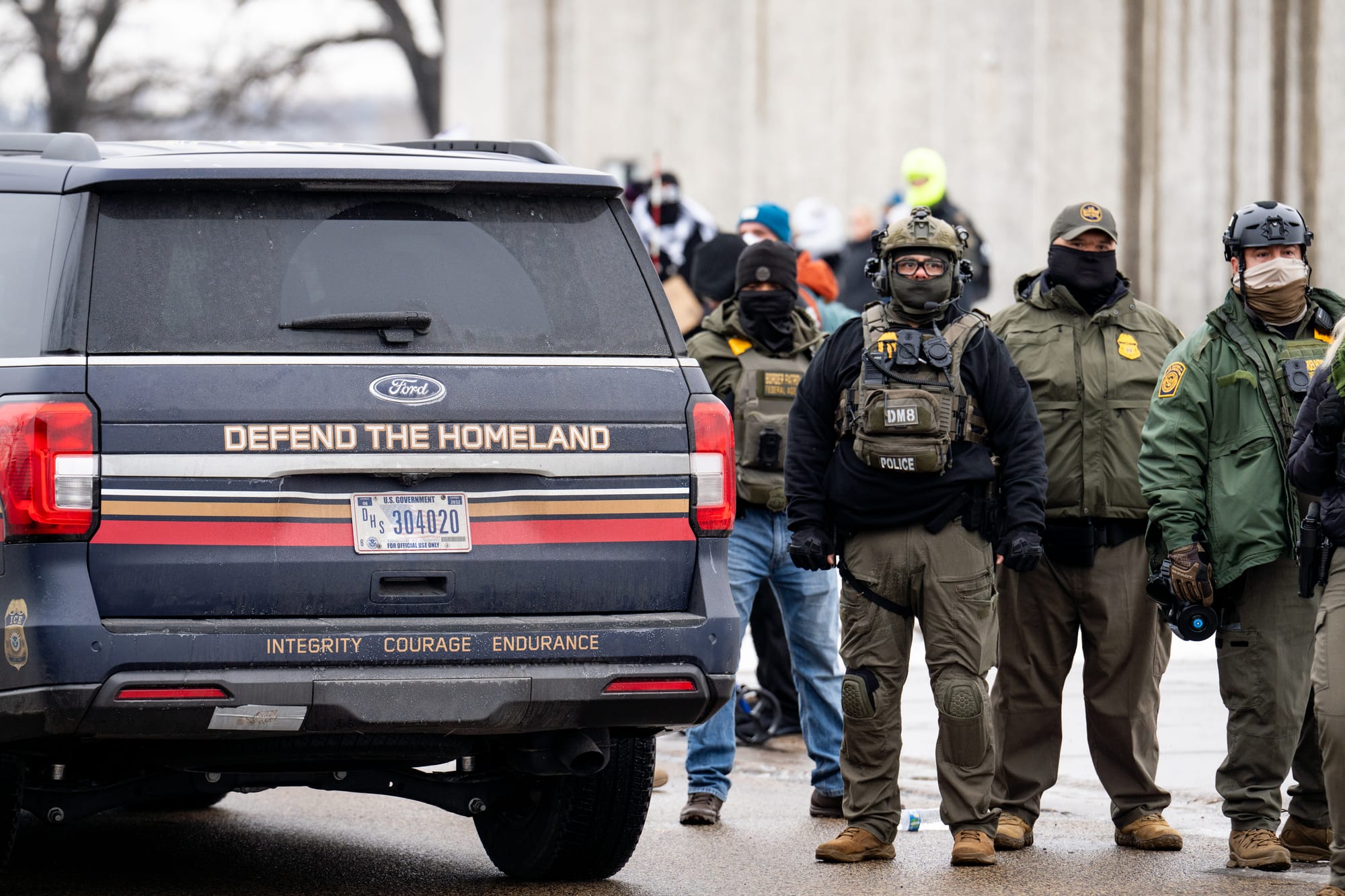
I can't (and won't) give you an answer for which comparisons you should and should not draw, but I do want to offer up some data I've been paying attention to lately.
A brief assemblage of facts
NPR covered the story of a 12 year old getting her first period while in hiding from ICE in Minneapolis. On the one hand, it's an inspiring story of neighbors and community pulling together to help in a moment of vulnerability. On another hand, it's a heartbreaking reminder that basic necessities cannot be taken for granted in such an unsafe environment. And a reminder that ICE raids and CBP surveillance aren't just life threatening incursions tearing families and communities apart, they're also depriving people of dignity and access to critical health and social support.
Jewish seniors in Florida are offering to hide their Haitian caregivers as temporary protected status for migrants from Haiti is imperiled. Even as the US Holocaust Museum criticized Minnesota governor Tim Walz for invoking the memory of Anne Frank amid ICE raids in Minneapolis, these seniors (some of whom survived the Holocaust themselves) see the parallels.
LA Taco just published an exclusive look at the missives being thrown over detention center walls attached to lotion, deodorant, and batteries.
They have collected 14 lotion bottles, two deodorant bottles, and one AA Battery that detainees have thrown over the fences with notes attached to them. These items have included a total of 102 names and A-Numbers. Organizers also collect countries of origin. A-Numbers are seven, eight, or nine digit numbers assigned by the Department of Homeland Security to people who are not U.S. Citizens, according to U.S. Citizenship and Immigration Services.
Meanwhile, DHS is in the process of acquiring 23 additional warehouses with the intention to turn them into detention facilities. The Trump administration has further moved to mandate dismissal of all appeals (and shorten the window for any appeal to 10 days) in immigration proceedings, so that deportations can proceed en masse, unencumbered by due process. The EU is considering sharing data, including fingerprints of travelers, with ICE/CBP.
What work does comparison do?
You don't need to take my assemblage of facts at face value, or as the only or most important set of facts you contend with. In fact, I strongly encourage you not to do that, and to collect more and different facts of your own. And to ask where others are getting their data, too.
Because that's part of the project, questioning the work that comparison does. When someone tells you "this is the case that comes to mind when I hear what ICE is doing," they're telling you what their frames of reference are. Many of us, myself included, were subjected to American public schooling, and as a result have limitations in our knowledge and scope, particularly around American history. That shapes which comparisons we draw, and which we have less access to.
You'll read a lot of argumentation about whether and when it's appropriate to compare a situation to the Holocaust, and concern for preserving the memory of that particular historical event as an exceptional act of cruelty. My personal belief is that a lot of (especially white, non-Jewish) Americans find that example accessible because we largely got to be the "victors" of WW2, and because it feels like an "easy" good vs. evil example—not necessarily out of an intentional desire to erase our country's racist history, but rather out of complications with accessing it.
But if you cast around, there are plenty of cases to which we can compare our current circumstances, whether you're looking for examples of success or failure, honorable fight or cowardice, extreme cruelty and atrocity or administrative state repression.
So my suggestion is, don't just collect more facts and more data about what's happening right now (although, do that too), but also: broaden your own reach and your own frames of reference. It might seem like a silly time to read a book or do some research, but especially if you're coming up short on inspiration, are feel trapped or despondent, or are searching for dimensions of connection that can help you build and reinforce your community right now, I cannot recommend highly enough the act of finding likeminded people, causes, and struggles. Elsewhere in the world. Elsewhere in history. Anywhere you can.
Links 'n' things
This is an Epstein-file-free zone.
Stuff you may have missed
- If you read only one of these links this week, let it be this one.
- ProPublica identified Alex Pretti's murderers
- 911, what is your emergency (ICE edition)
- Students at Rice University made this map of ICE activity and detentions
- A take on how ICE underestimated Minnesota, including this:
No matter how many more armed men Trump sends to impose his will on the people of Minnesota, all he can do is accentuate their valor. No application of armed violence can make the men with guns as heroic as the people who choose to stand in their path with empty hands in defense of their neighbors. These agents, and the president who sent them, are no one’s heroes, no one’s saviors—just men with guns who have to hide their faces to shoot a mom in the face, and a nurse in the back.


![[RRPG] Use your voice, or exit stage left?](/content/images/size/w600/2026/02/photo-1591261495530-262c58c5f31a.jpeg)